






MSDS

3RD PARTY TEST RESULT
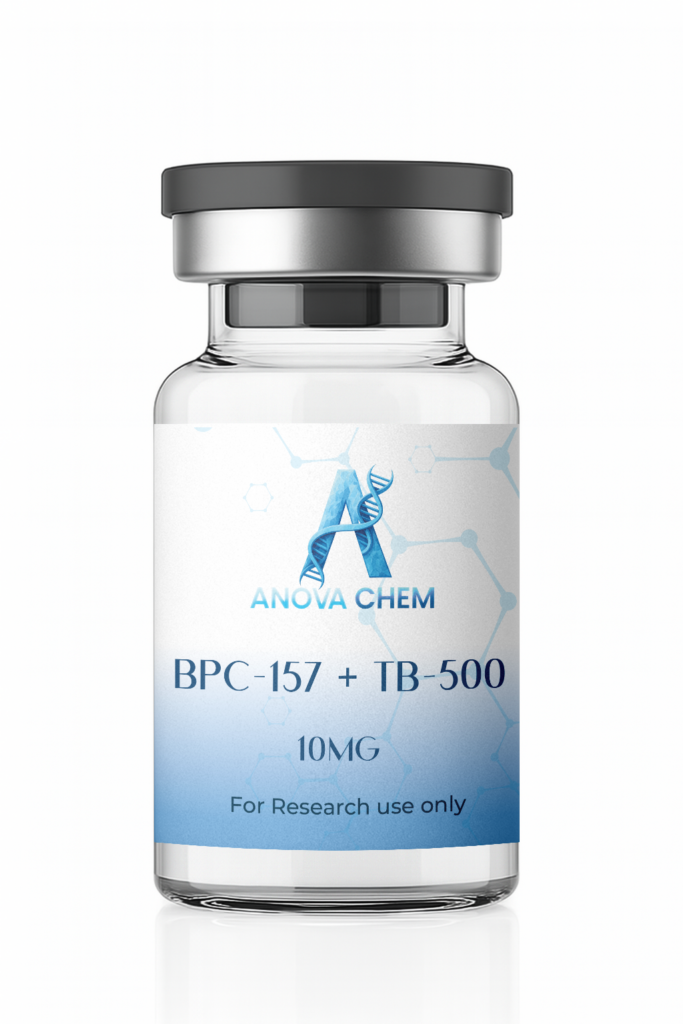
BPC-157, TB-500, GHK-Cu (Glow Blend)
AOD-9604, lipolytic peptide fragment, which was derived from human growth hormone (HGH) during the late 1990s was modified from HGH residues 176-191. This modified compound primarily works as an element for fat burning and obesity treatment, while the exact mechanism by which this happens is still under research. It stimulates the breakdown (metabolism) of fat stores and inhibits the formation of fats without any detected side effects, affecting blood sugar levels or causing abnormal growth. In addition, the peptide shows several, apparently independent, positive effects on cartilage regeneration, improvement of metabolism or heart activity, confirmed by research.
€37.99
Tax included
Molecular Formula:
Bpc-157: C62H98N16O22 Cu-GHK: C14H24CuN6O4 Timbetasin: C212H350N56O78S
Molecular Weight:
Bpc-157: 1419.5 Cu-GHK: 403.92 Timbetasin: 4963
Monoisotopic Mass:
Bpc-157: 1418.70415882 Cu-GHK: 403.1155 Timbetasin: 4960.4863169
Polar Area:
Bpc-157: 573 Cu-GHK: 176 Timbetasin: 2250
Complexity:
Bpc-157: 3040 Cu-GHK: 433 Timbetasin: 12200
XLogP:
Bpc-157: -9 Timbetasin: -43.5
Heavy Atom Count:
Bpc-157: 100 Cu-GHK: 25 Timbetasin: 347
Hydrogen Bond Donor Count:
Bpc-157: 16 Cu-GHK: 6 Timbetasin: 72
Hydrogen Bond Acceptor Count:
Bpc-157: 24 Cu-GHK: 7 Timbetasin: 88
Rotatable Bond Count:
Bpc-157: 39 Cu-GHK: 11 Timbetasin: 180
PubChem LCSS:
Bpc-157 Laboratory Chemical Safety Summary Cu-GHK Laboratory Chemical Safety Summary Timbetasin Laboratory Chemical Safety Summary
Description of AOD-9604
A synthetically produced peptide AOD-9604 consists of 15 amino acids. It is derived fragment of human growth hormone (fragment 176-191) known mainly for its lipolytic qualities, thanks to which it can perfectly stimulate body fat burning without negative side effects, that are mainly perceived by using common weight loss drugs. Study has shown that it has a very good tolerability and safety, thus the immune system does not form any antibodies against the AOD-9604 peptide. Other great benefit seems to be that blood sugar levels are not affected. However, several studies have also shown that chronic treatment with AOD-9604 had no adverse effect on insulin sensitivity of researched animals. So, the peptide does not appear to affect IGF-1 or insulin levels at all.
Now we would like to bring you closer to the effects of the peptide, which have been researched and confirmed in studies.
[1] [2]
Research Confirmed Effects
Overview
The BPC-157 + TB500 (Thymosin Beta 4) + GHK-Cu Blend is a composite research formulation developed to facilitate investigation into the combined biological activity of three extensively studied bioactive peptides. Each component peptide has been independently evaluated in preclinical and experimental systems for its role in inflammation modulation, tissue repair processes, angiogenesis, cytoprotection, and regulation of gene expression. While BPC-157, TB500, and GHK-Cu share overlapping functional domains, their molecular targets and intracellular signaling pathways are distinct. The rationale for combining these peptides lies in the hypothesis that parallel modulation of nitric oxide signaling, cytoskeletal dynamics, extracellular matrix remodeling, and oxidative stress responses may produce additive or synergistic effects in controlled research models. This blend is supplied to support experimental designs focused on multi-pathway signaling analysis, comparative wound repair models, inflammatory pathway regulation, and systems-level investigation of coordinated tissue responses under laboratory conditions.
Biochemical Characteristics
BPC-157 is a synthetic pentadecapeptide derived from a naturally occurring gastric body protection compound. It exhibits high stability in biological environments and demonstrates rapid systemic distribution in animal models. TB500 is a synthetic fragment of thymosin beta-4, a highly conserved actin-binding protein involved in cytoskeletal organization, cellular migration, and intracellular transport processes. GHK-Cu is a copper-complexed tripeptide (Gly-His-Lys) naturally present in human plasma and other biological fluids. The peptide exhibits metal-chelating properties and participates in redox regulation and extracellular matrix turnover. Together, these peptides represent chemically stable, low-molecular-weight signaling molecules suitable for experimental use in cellular, tissue, and whole-animal research systems.
Research Applications
This blend is utilized in research environments investigating coordinated regulation of inflammation, angiogenesis, fibroblast activity, and cellular stress responses. Experimental applications include in vitro cell culture systems, ex vivo tissue models, and animal studies designed to observe multi-pathway modulation following peptide exposure. Specific areas of investigation include: Regulation of nitric oxide and endothelial signaling pathways Actin dynamics and cell migration processes Extracellular matrix deposition and remodeling Oxidative stress mitigation and redox balance Gene expression modulation related to repair and immune signaling The combined formulation allows researchers to evaluate overlapping and divergent signaling effects without the need for parallel administration protocols.
Pathway / Mechanistic Context
BPC-157 is primarily associated with modulation of nitric oxide synthase activity, vascular endothelial growth factor (VEGF) signaling, and regulation of inflammatory mediators. These effects appear to be mediated through changes in gene expression patterns rather than direct receptor agonism. TB500 influences intracellular actin availability, thereby regulating cell motility, differentiation, and structural reorganization. In parallel, it alters transcriptional pathways involved in angiogenesis, cytokine production, and tissue remodeling, including PI3K/Akt and NF-κB-associated signaling cascades. GHK-Cu contributes to redox homeostasis and extracellular matrix balance by stimulating metalloproteinase activity while simultaneously increasing anti-protease expression. It also participates in copper-dependent antioxidant enzyme regulation. The convergence of these mechanisms supports investigation into multi-layered signaling coordination within inflammatory and reparative biological systems.
Preclinical Research Summary
Preclinical studies of BPC-157 demonstrate widespread tissue distribution and modulation of inflammatory responses across multiple organ systems. Experimental models suggest rapid peptide uptake and sustained biological activity at the tissue level. TB500 has been evaluated in diverse animal and cellular models, where it is associated with enhanced cellular migration, angiogenic signaling, and regulation of immune cell activity. Its involvement in cytoskeletal regulation positions it as a central mediator of coordinated tissue responses. GHK-Cu has been investigated for its role in oxidative stress control, extracellular matrix turnover, and gene expression modulation. Transcriptomic analyses indicate broad influence over genes associated with inflammation, repair, and cellular maintenance. While combination-specific outcomes remain an area of ongoing investigation, existing preclinical data support the rationale for studying these peptides together in controlled experimental systems.
Form & Analytical Testing
The BPC-157 + TB500 + GHK-Cu Blend is supplied as a research-grade peptide formulation. Identity and composition are verified using standard analytical methodologies, including high-performance liquid chromatography (HPLC) and mass spectrometry (MS). Each batch is manufactured under controlled laboratory conditions to ensure consistency and suitability for experimental research. Storage and handling should follow peptide-specific laboratory protocols.
About The Author
The above literature was researched, edited and organized by Dr. E. Logan, M.D. Dr. E. Logan holds a doctorate degree from Case Western Reserve University School of Medicine and a B.S. in molecular biology.
Scientific Journal Author
Patrycja Kleczkowska, Assoc. Prof. Ph.D. Eng., is an employee of the Military Institute of Hygiene and Epidemiology as a Deputy Director for scientific affairs. As an employee of the Maria Sklodowska-Curie Medical Academy in Warsaw, she deals with didactic activities and scientific work focusing on the field of pharmacology. As an employee of the Polish Academy of Sciences from 2005 to 2015, she began her work on designing and synthesizing drugs with biological activity, mainly in the area of analgesic and neuroprotective effects. Currently, she is expanding her knowledge and skills on the toxicity of new biologically active potential therapeutic substances and defining their safety profiles. Patrycja Kleczkowska, Assoc. Prof. Ph.D. Eng is being referenced as one of the leading scientists involved in the research and development of BPC-157, TB-500 and GHK-Cu. In no way is this doctor/scientist endorsing or advocating the purchase, sale, or use of this product for any reason. There is no affiliation or relationship, implied or otherwise, between Peptide Sciences and this doctor. The purpose of citing the doctor is to acknowledge, recognize, and credit the exhaustive research and development efforts conducted by the scientists studying this peptide. Patrycja Kleczkowska, Assoc. Prof. Ph.D. Eng is listed in [2] under the referenced citations.
Referenced Citations
L. He et al., “Pharmacokinetics, distribution, metabolism, and excretion of body-protective compound 157, a potential drug for treating various wounds, in rats and dogs,” Front Pharmacol, vol. 13, p. 1026182, Dec. 2022, doi: 10.3389/fphar.2022.1026182. M. Józwiak, M. Bauer, W. Kamysz, and P. Kleczkowska, “Multifunctionality and Possible Medical Application of the BPC 157 Peptide—Literature and Patent Review,” Pharmaceuticals, vol. 18, no. 2, Art. no. 2, Feb. 2025, doi: 10.3390/ph18020185. Y. Xing, Y. Ye, H. Zuo, and Y. Li, “Progress on the Function and Application of Thymosin β4,” Front Endocrinol (Lausanne), vol. 12, p. 767785, Dec. 2021, doi: 10.3389/fendo.2021.767785. E. Lee, C. Walker, and B. Ayadi, “Effect of BPC-157 on Symptoms in Patients with Interstitial Cystitis: A Pilot Study,” Altern Ther Health Med, vol. 30, no. 10, pp. 12–17, Oct. 2024. P. Sikirić et al., “The influence of a novel pentadecapeptide, BPC 157, on N(G)-nitro-L-arginine methylester and L-arginine effects on stomach mucosa integrity and blood pressure,” Eur J Pharmacol, vol. 332, no. 1, pp. 23–33, Jul. 1997, doi: 10.1016/s0014-2999(97)01033-9. S. S. Iyer and G. Cheng, “Role of Interleukin 10 Transcriptional Regulation in Inflammation and Autoimmune Disease,” Crit Rev Immunol, vol. 32, no. 1, pp. 23–63, 2012. G. Sosne, P. Qiu, and M. Kurpakus-Wheater, “Thymosin beta-4 and the eye: I can see clearly now the pain is gone,” Ann N Y Acad Sci, vol. 1112, pp. 114–122, Sep. 2007, doi: 10.1196/annals.1415.004. T. Huang et al., “Body protective compound-157 enhances alkali-burn wound healing in vivo and promotes proliferation, migration, and angiogenesis in vitro,” Drug Des Devel Ther, vol. 9, pp. 2485–2499, 2015, doi: 10.2147/DDDT.S82030. C.-H. Chang, W.-C. Tsai, Y.-H. Hsu, and J.-H. S. Pang, “Pentadecapeptide BPC 157 enhances the growth hormone receptor expression in tendon fibroblasts,” Molecules, vol. 19, no. 11, Art. no. 11, Nov. 2014, doi: 10.3390/molecules191119066. T. Hara, Y. Nakayama, and N. Nara, “[Regenerative medicine of skeletal muscle],” Rinsho Shinkeigaku, vol. 45, no. 11, pp. 880–882, Nov. 2005. Q. Zhang, L. Yan, J. Lu, and X. Zhou, “Glycyl-L-histidyl-L-lysine-Cu2+ attenuates cigarette smoke- induced pulmonary emphysema and inflammation by reducing oxidative stress pathway,” Front Mol Biosci, vol. 9, p. 925700, 2022, doi: 10.3389/fmolb.2022.925700. J.-R. Park, H. Lee, S.-I. Kim, and S.-R. Yang, “The tri-peptide GHK-Cu complex ameliorates lipopolysaccharide-induced acute lung injury in mice,” Oncotarget, vol. 7, no. 36, pp. 58405–58417, Sep. 2016, doi: 10.18632/oncotarget.11168. M. Kukowska, M. Kukowska-Kaszuba, and K. Dzierzbicka, “In vitro studies of antimicrobial activity of Gly-His-Lys conjugates as potential and promising candidates for therapeutics in skin and tissue infections,” Bioorg Med Chem Lett, vol. 25, no. 3, pp. 542–546, Feb. 2015, doi: 10.1016/j.bmcl.2014.12.029. P. Sikiric et al., “Stable Gastric Pentadecapeptide BPC 157 as Useful Cytoprotective Peptide Therapy in the Heart Disturbances, Myocardial Infarction, Heart Failure, Pulmonary Hypertension, Arrhythmias, and Thrombosis Presentation,” Biomedicines, vol. 10, no. 11, p. 2696, Oct. 2022, doi: 10.3390/biomedicines10112696. L. Pickart and A. Margolina, “Regenerative and Protective Actions of the GHK-Cu Peptide in the Light of the New Gene Data,” Int J Mol Sci, vol. 19, no. 7, p. 1987, Jul. 2018, doi: 10.3390/ijms19071987. ALL ARTICLES AND PRODUCT INFORMATION PROVIDED ON THIS WEBSITE ARE FOR INFORMATIONAL AND EDUCATIONAL PURPOSES ONLY.
RUO Disclaimer
The products offered on this website are furnished for in-vitro studies only. In-vitro studies (Latin: in glass) are performed outside of the body. These products are not medicines or drugs and have not been approved by the FDA to prevent, treat or cure any medical condition, ailment or disease. Bodily introduction of any kind into humans or animals is strictly forbidden by law. For Research Use Only (RUO). This product is intended exclusively for laboratory research and experimental use. Not for human use, medical use, diagnostic use, or veterinary use. These materials have not been approved by the FDA to diagnose, treat, cure, or prevent any disease. Bodily introduction into humans or animals is strictly prohibited.
Best-selling peptides
View all
Our Reviews
4.9/5
out of 188 reviews