








MSDS

3RD PARTY TEST RESULT
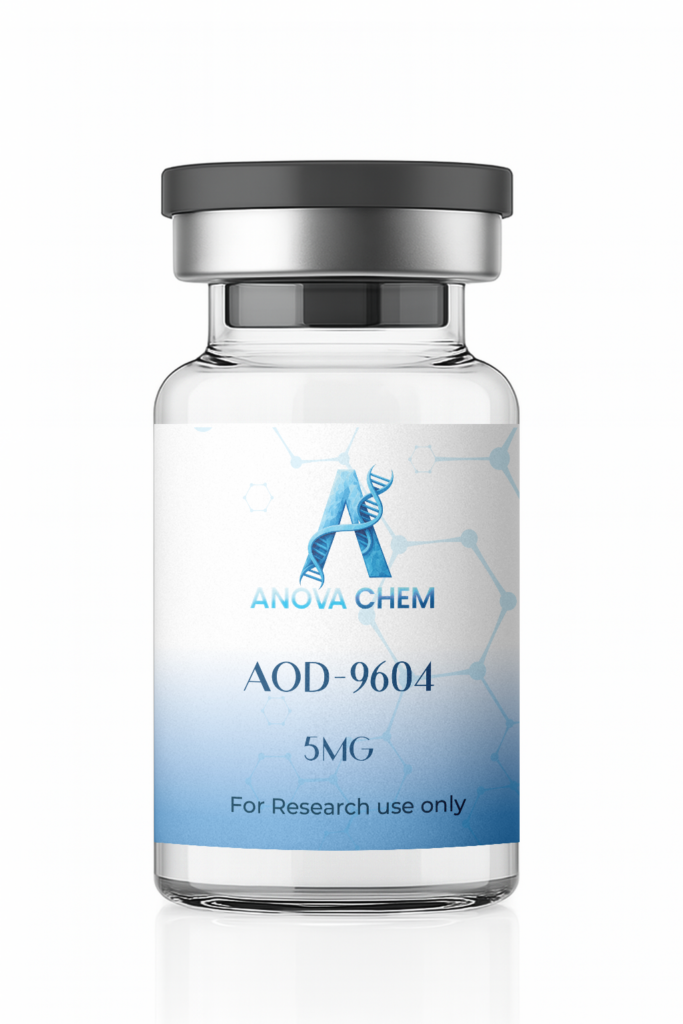
AOD9604 6mg
AOD-9604, lipolytic peptide fragment, which was derived from human growth hormone (HGH) during the late 1990s was modified from HGH residues 176-191. This modified compound primarily works as an element for fat burning and obesity treatment, while the exact mechanism by which this happens is still under research. It stimulates the breakdown (metabolism) of fat stores and inhibits the formation of fats without any detected side effects, affecting blood sugar levels or causing abnormal growth. In addition, the peptide shows several, apparently independent, positive effects on cartilage regeneration, improvement of metabolism or heart activity, confirmed by research.
€37.99
Tax included
Molecular Formula:
Molecular Weight:
1815.1
Monoisotopic Mass:
1813.86035961
Polar Area:
815
Complexity:
3710
XLogP:
-4.8
Heavy Atom Count:
126
Hydrogen Bond Donor Count:
28
Hydrogen Bond Acceptor Count:
28
Rotatable Bond Count:
45
PubChem LCSS:
Aod-9604 Laboratory Chemical Safety Summary
1 Usage of peptide
The product is intended for scientific research and development purposes only. Chemical substances shall not be used as a drug, medicine, active substance, medical aid, cosmetic product, a substance for production of a cosmetic product neither for human consumption that is any food or food supplement or otherwise similarly used on humans or animals. Intended only for in-vitro research, such as Receptor-ligand binding studies, Enzyme activity assays, Cell proliferation assays, Cell signaling assays, Epitope mapping, ect.
2 Peptides in transport
Peptides in lyophilized form are supplied in glass vials by standard shipping methods and do not require refrigeration. Short-term temperature fluctuations during transport will not reduce their quality and efficacy. Even at high summer temperatures, the peptides in lyophilized form are stable for several weeks.
3 Storage of lyophilized peptides
Upon receiving the lyophilized peptide, store at 4 °C or colder and away from bright light. Lyophilized peptides are stable at room temperature for weeks, but for longer-term storage, it is safer to store at -20 °C or colder. Exposure to moisture will greatly decrease long-term stability of lyophilized peptides. Before using the peptide, remove from cold storage and allow the peptide to equilibrate to room temperature before removing the lid of the container, in order to reduce the uptake of moisture that is present in the surrounding atmosphere.
4 Storage of peptide solutions
The shelf life of peptide solutions is limited. Freezing the aliquots will prolong the storage life of the peptide. What is globally accepted for peptides in solution is that they are generally stable for 3 or more weeks at +4°C and for 3-4 months at -20°C. Avoid repeated freeze-thaw cycles, as this can degrade the peptides.
Description of AOD-9604
A synthetically produced peptide AOD-9604 consists of 15 amino acids. It is derived fragment of human growth hormone (fragment 176-191) known mainly for its lipolytic qualities, thanks to which it can perfectly stimulate body fat burning without negative side effects, that are mainly perceived by using common weight loss drugs. Study has shown that it has a very good tolerability and safety, thus the immune system does not form any antibodies against the AOD-9604 peptide. Other great benefit seems to be that blood sugar levels are not affected. However, several studies have also shown that chronic treatment with AOD-9604 had no adverse effect on insulin sensitivity of researched animals. So, the peptide does not appear to affect IGF-1 or insulin levels at all.
Now we would like to bring you closer to the effects of the peptide, which have been researched and confirmed in studies.
[1] [2]
Research Confirmed Effects
1. Lipid Metabolism & Adipose Biology in Preclinical Models
AOD9604 has been evaluated in animal models and in mechanistic study designs that quantify lipid-metabolism–associated readouts, including changes in lipid handling markers and adipose-tissue–linked endpoints under controlled dosing paradigms. Comparative studies have also examined AOD9604 alongside full-length hGH to differentiate fragment-driven activity profiles from broader somatotropic signaling frameworks.
2. Receptor-Pathway Independence Testing in Genetic Models
Preclinical studies have used genetic mouse models (including β3-adrenergic receptor knock-out designs) to evaluate whether lipid-metabolism–linked readouts observed with AOD9604 are maintained when specific adrenergic signaling components are absent. These designs are used to support hypothesis generation regarding pathway attribution and to refine mechanistic models of lipid mobilization in vivo.
3. Joint Tissue Biology in Osteoarthritis-Associated Animal Models
AOD9604 has been investigated in rabbit osteoarthritis models using intra-articular experimental designs, including conditions with and without hyaluronic acid. These studies quantify preclinical endpoints relevant to joint-tissue response and structural pathology within the constraints of the model system, supporting laboratory investigation of cartilage-associated signaling environments and matrix remodeling biology.
Pathway / Mechanistic Context
AOD9604 is used in mechanistic study designs to map signaling and biochemical endpoints associated with lipid metabolism and adipose tissue function. Experimental readouts may include changes in lipid turnover markers, adipocyte-associated transcriptional programs, and pathway-proximal signals linked to nutrient handling. Comparative designs may include full-length hGH as a reference ligand to contextualize fragment-derived effects within broader somatotropic signaling networks, while avoiding confounding interpretation from pleiotropic endocrine pathways.
Preclinical Research Summary
Preclinical investigations have assessed AOD9604 in obese mouse models and in β3-adrenergic receptor knock-out mice, using lipid-metabolism endpoints and body composition–adjacent measurements to support mechanistic hypothesis testing regarding adipose biology pathways.
Best-selling peptides
View all
Our Reviews
4.9/5
out of 188 reviews