







MSDS

3RD PARTY TEST RESULT
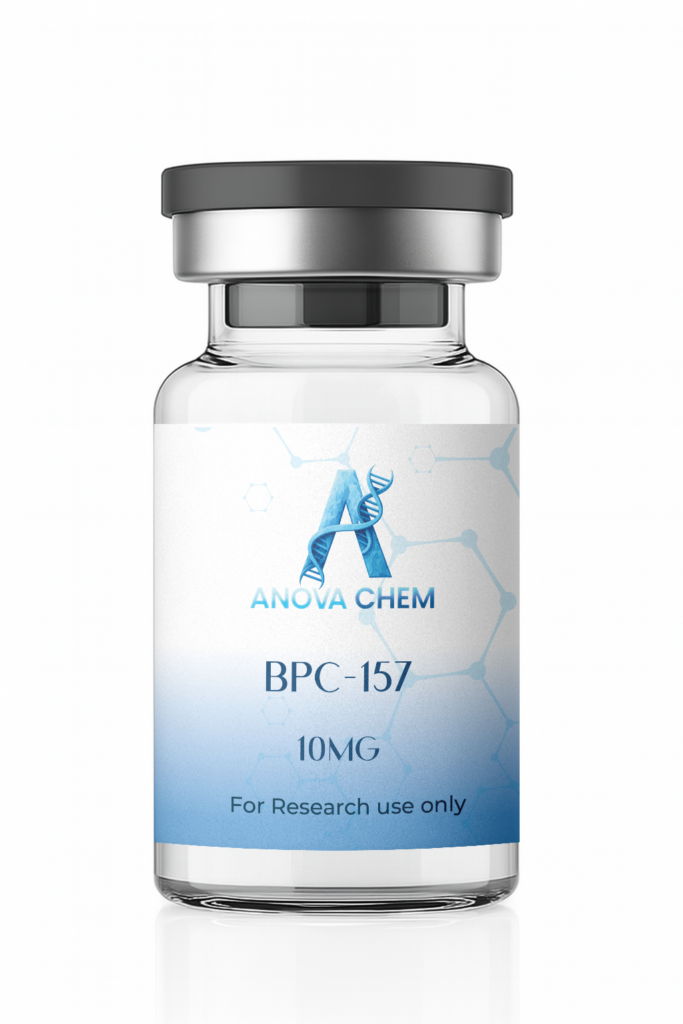
BPC-157
AOD-9604, lipolytic peptide fragment, which was derived from human growth hormone (HGH) during the late 1990s was modified from HGH residues 176-191. This modified compound primarily works as an element for fat burning and obesity treatment, while the exact mechanism by which this happens is still under research. It stimulates the breakdown (metabolism) of fat stores and inhibits the formation of fats without any detected side effects, affecting blood sugar levels or causing abnormal growth. In addition, the peptide shows several, apparently independent, positive effects on cartilage regeneration, improvement of metabolism or heart activity, confirmed by research.
€37.99
Tax included
Molecular Formula:
C62H98N16O22
Molecular Weight:
1419.5
Monoisotopic Mass:
1418.70415882
Polar Area:
573
Complexity:
3040
XLogP:
-9
Heavy Atom Count:
100
Hydrogen Bond Donor Count:
16
Hydrogen Bond Acceptor Count:
24
Rotatable Bond Count:
39
PubChem LCSS:
Bpc-157 Laboratory Chemical Safety Summary
1 Usage of peptide
The product is intended for scientific research and development purposes only. Chemical substances shall not be used as a drug, medicine, active substance, medical aid, cosmetic product, a substance for production of a cosmetic product neither for human consumption that is any food or food supplement or otherwise similarly used on humans or animals. Intended only for in-vitro research, such as Receptor-ligand binding studies, Enzyme activity assays, Cell proliferation assays, Cell signaling assays, Epitope mapping, ect.
2 Peptides in transport
Peptides in lyophilized form are supplied in glass vials by standard shipping methods and do not require refrigeration. Short-term temperature fluctuations during transport will not reduce their quality and efficacy. Even at high summer temperatures, the peptides in lyophilized form are stable for several weeks.
3 Storage of lyophilized peptides
Upon receiving the lyophilized peptide, store at 4 °C or colder and away from bright light. Lyophilized peptides are stable at room temperature for weeks, but for longer-term storage, it is safer to store at -20 °C or colder. Exposure to moisture will greatly decrease long-term stability of lyophilized peptides. Before using the peptide, remove from cold storage and allow the peptide to equilibrate to room temperature before removing the lid of the container, in order to reduce the uptake of moisture that is present in the surrounding atmosphere.
4 Storage of peptide solutions
The shelf life of peptide solutions is limited. Freezing the aliquots will prolong the storage life of the peptide. What is globally accepted for peptides in solution is that they are generally stable for 3 or more weeks at +4°C and for 3-4 months at -20°C. Avoid repeated freeze-thaw cycles, as this can degrade the peptides.
Description of AOD-9604
A synthetically produced peptide AOD-9604 consists of 15 amino acids. It is derived fragment of human growth hormone (fragment 176-191) known mainly for its lipolytic qualities, thanks to which it can perfectly stimulate body fat burning without negative side effects, that are mainly perceived by using common weight loss drugs. Study has shown that it has a very good tolerability and safety, thus the immune system does not form any antibodies against the AOD-9604 peptide. Other great benefit seems to be that blood sugar levels are not affected. However, several studies have also shown that chronic treatment with AOD-9604 had no adverse effect on insulin sensitivity of researched animals. So, the peptide does not appear to affect IGF-1 or insulin levels at all.
Now we would like to bring you closer to the effects of the peptide, which have been researched and confirmed in studies.
[1] [2]
Research Confirmed Effects
Overview
BPC-157 is a synthetic pentadecapeptide derived from a larger endogenous gastric protein complex known as Body Protection Compound (BPC). The peptide consists of a defined 15–amino acid sequence and has been examined in preclinical experimental systems for molecular stability and biochemical activity. Within laboratory research environments, BPC-157 is used as a molecular probe to investigate cellular migration, extracellular matrix dynamics, angiogenic signaling pathways, oxidative stress modulation, and cytoskeletal organization. All data associated with this peptide are derived exclusively from in-vitro and in-vivo animal research models.
Biochemical Characteristics
BPC-157 is a linear peptide lacking disulfide bonds. Its proline-rich sequence contributes to conformational rigidity and reduced susceptibility to proteolytic degradation, supporting stability in aqueous experimental systems.
Research Applications
BPC-157 is supplied exclusively for laboratory research use and has been employed in controlled experimental studies examining: Fibroblast proliferation and directional migration Endothelial cell growth and angiogenic pattern formation Extracellular matrix deposition and remodeling Cytoskeletal organization and focal adhesion signaling Oxidative stress marker modulation in animal models Nitric oxide–associated biochemical pathways All applications are limited to non-clinical research systems designed to elucidate fundamental biological mechanisms.
Pathway / Mechanistic Context
Mechanistic investigations indicate that BPC-157 modulates signaling pathways involved in cellular motility and vascular organization. Experimental data suggest interaction with VEGFR2-associated signaling cascades and downstream nitric oxide–related molecular processes. Additional in-vitro findings describe phosphorylation changes in focal adhesion signaling proteins involved in cytoskeletal anchoring and cell migration. These observations support use as a probe for cytoskeletal remodeling pathways in controlled experimental systems.
Preclinical Research Summary
Published preclinical literature documents investigations of BPC-157 across multiple experimental models. In rodent systems, the peptide has been studied in research examining vascular recruitment, gastrointestinal tissue integrity, and connective tissue remodeling under controlled laboratory conditions. Additional investigations in avian and invertebrate models have explored peptide stability and tissue-level stress responses, contributing to broader understanding of conserved biological signaling mechanisms.
Form & Analytical Testing
BPC-157 is supplied as a lyophilized peptide produced via solid-phase peptide synthesis. Each lot undergoes analytical verification using high-performance liquid chromatography and mass spectrometry to confirm molecular identity and purity. Analytical data are provided to support reproducibility and consistency in laboratory workflows.
Article Author
The above literature was researched, edited and organized by Dr. E. Logan, M.D. Dr. E. Logan holds a doctorate degree from Case Western Reserve University School of Medicine and a B.S. in molecular biology.
Scientific Journal Author
Predrag Sikiric, lead author of “Novel Cytoprotective Mediator, Stable Gastric Pentadecapeptide BPC 157. Vascular Recruitment and Gastrointestinal Tract Healing”, and co-author of “Stable gastric pentadecapeptide BPC 157 in honeybee (Apis mellifera) therapy, to control Nosema ceranae invasions in apiary conditions,” is a Professor of Medical Department at University of Zagreb. Predrag Sikiric is listed in [9] and [16] under the referenced citations. Predrag Sikiric is being referenced as one of the leading scientists involved in the research and development of BPC-157. In no way is this doctor/scientist endorsing or advocating the purchase, sale, or use of this product for any reason. There is no affiliation or relationship, implied or otherwise, between Peptide Sciences and this doctor. The purpose of citing the doctor is to acknowledge, recognize, and credit the exhaustive research and development efforts conducted by the scientists studying this peptide.
Referenced Citations
T. Huang et al., “Body protective compound-157 enhances alkali-burn wound healing in vivo and promotes proliferation, migration, and angiogenesis in vitro,” Drug Des. Devel. Ther., vol. 9, pp. 2485–2499, 2015. D. Drmic et al., “Counteraction of perforated cecum lesions in rats: Effects of pentadecapeptide BPC 157, L-NAME and L-arginine,” World J. Gastroenterol., vol. 24, no. 48, pp. 5462–5476, Dec. 2018. F. Amic et al., “Bypassing major venous occlusion and duodenal lesions in rats, and therapy with the stable gastric pentadecapeptide BPC 157, L-NAME and L-arginine,” World J. Gastroenterol., vol. 24, no. 47, pp. 5366–5378, Dec. 2018. A. Duzel et al., “Stable gastric pentadecapeptide BPC 157 in the treatment of colitis and ischemia and reperfusion in rats: New insights,” World J. Gastroenterol., vol. 23, no. 48, pp. 8465–8488, Dec. 2017. J. Vukojević et al., “Rat inferior caval vein (ICV) ligature and particular new insights with the stable gastric pentadecapeptide BPC 157,” Vascul. Pharmacol., vol. 106, pp. 54–66, 2018. D. Drmic et al., “Celecoxib-induced gastrointestinal, liver and brain lesions in rats, counteraction by BPC 157 or L-arginine, aggravation by L-NAME,” World J. Gastroenterol., vol. 23, no. 29, pp. 5304–5312, Aug. 2017. M.-J. Hsieh et al., “Therapeutic potential of pro-angiogenic BPC157 is associated with VEGFR2 activation and up-regulation,” J. Mol. Med. Berl. Ger., vol. 95, no. 3, pp. 323–333, 2017. Z. Grabarevic et al., “The influence of BPC 157 on nitric oxide agonist and antagonist induced lesions in broiler chicks,” J. Physiol. Paris, vol. 91, no. 3–5, pp. 139–149, Oct. 1997. P. Sikiric et al., “Novel Cytoprotective Mediator, Stable Gastric Pentadecapeptide BPC 157. Vascular Recruitment and Gastrointestinal Tract Healing,” Curr. Pharm. Des., vol. 24, no. 18, pp. 1990–2001, 2018. S. Seiwerth et al., “BPC 157 and Standard Angiogenic Growth Factors. Gastrointestinal Tract Healing, Lessons from Tendon, Ligament, Muscle and Bone Healing,” Curr. Pharm. Des., vol. 24, no. 18, pp. 1972–1989, 2018. C.-H. Chang et al., “The promoting effect of pentadecapeptide BPC 157 on tendon healing involves tendon outgrowth, cell survival, and cell migration,” J. Appl. Physiol., vol. 110, no. 3, pp. 774–780, Oct. 2010. Y.-L. Hu et al., “FAK and paxillin dynamics at focal adhesions in the protrusions of migrating cells,” Sci. Rep., vol. 4, p. 6024, Aug. 2014. K. Škrlec et al., “Engineering recombinant Lactococcus lactis as a delivery vehicle for BPC-157 peptide with antioxidant activities,” Appl. Microbiol. Biotechnol., vol. 102, no. 23, pp. 10103–10117, Dec. 2018. D. Strinic et al., “BPC 157 counteracts QTc prolongation induced by haloperidol, fluphenazine, clozapine, olanzapine, quetiapine, sulpiride, and metoclopramide in rats,” Life Sci., vol. 186, pp. 66–79, Oct. 2017. N. Jelovac et al., “Pentadecapeptide BPC 157 attenuates disturbances induced by neuroleptics: the effect on catalepsy and gastric ulcers in mice and rats,” Eur. J. Pharmacol., vol. 379, no. 1, pp. 19–31, Aug. 1999. I. Tlak Gajger et al., “Stable gastric pentadecapeptide BPC 157 in honeybee (Apis mellifera) therapy, to control Nosema ceranae invasions in apiary conditions,” J. Vet. Pharmacol. Ther., vol. 41, no. 4, pp. 614–621, Aug. 2018. ALL ARTICLES AND PRODUCT INFORMATION PROVIDED ON THIS WEBSITE ARE FOR INFORMATIONAL AND EDUCATIONAL PURPOSES ONLY.
RUO Disclaimer
The products offered on this website are furnished for in-vitro studies only. In-vitro studies (Latin: in glass) are performed outside of the body. These products are not medicines or drugs and have not been approved by the FDA to prevent, treat or cure any medical condition, ailment or disease. Bodily introduction of any kind into humans or animals is strictly forbidden by law. For Laboratory Research Only. Not for human use, medical use, diagnostic use, or veterinary use.
Best-selling peptides
View all
Our Reviews
4.9/5
out of 188 reviews