







MSDS

3RD PARTY TEST RESULT
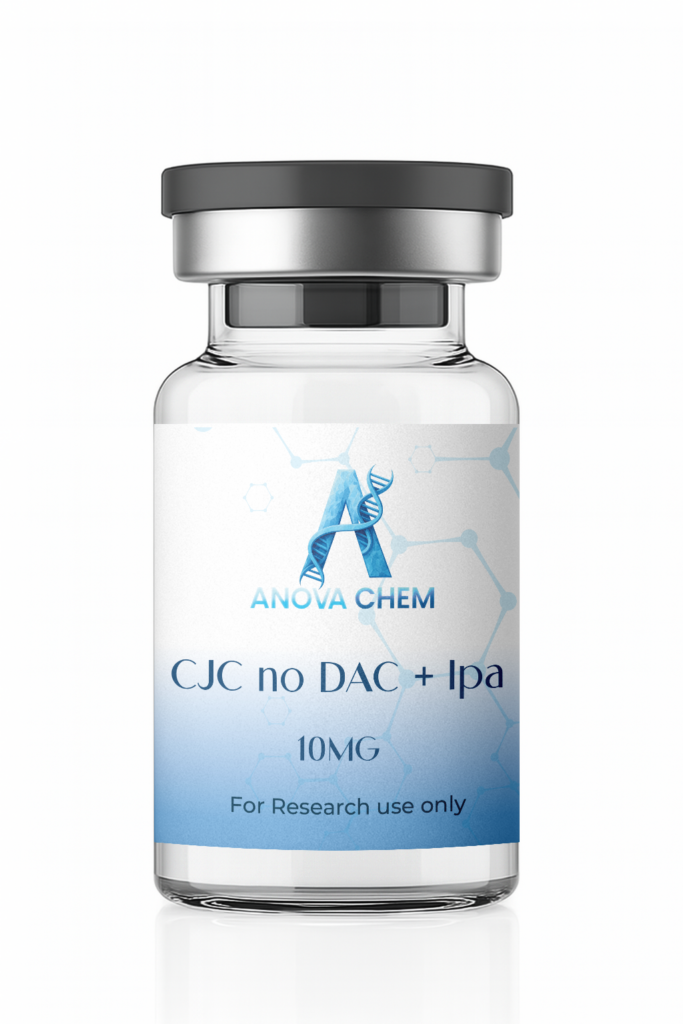
CJC-1295 (no DAC), Ipamorelin 10mg (Blend)
AOD-9604, lipolytic peptide fragment, which was derived from human growth hormone (HGH) during the late 1990s was modified from HGH residues 176-191. This modified compound primarily works as an element for fat burning and obesity treatment, while the exact mechanism by which this happens is still under research. It stimulates the breakdown (metabolism) of fat stores and inhibits the formation of fats without any detected side effects, affecting blood sugar levels or causing abnormal growth. In addition, the peptide shows several, apparently independent, positive effects on cartilage regeneration, improvement of metabolism or heart activity, confirmed by research.
€37.99
Tax included
Molecular Formula:
CJC-1295 Acetate: C152H252N44O42 Ipamorelin: C38H49N9O5
Molecular Weight:
CJC-1295 Acetate: 3367.9 Ipamorelin: 711.9
Monoisotopic Mass:
CJC-1295 Acetate: 3365.8935782 Ipamorelin: 711.3856657
Polar Area:
CJC-1295 Acetate: 1450 Ipamorelin: 240
Complexity:
CJC-1295 Acetate: 7710 Ipamorelin: 1200
XLogP:
CJC-1295 Acetate: -10.7 Ipamorelin: 1.8
Heavy Atom Count:
CJC-1295 Acetate: 238 Ipamorelin: 52
Hydrogen Bond Donor Count:
CJC-1295 Acetate: 52 Ipamorelin: 8
Hydrogen Bond Acceptor Count:
CJC-1295 Acetate: 48 Ipamorelin: 8
Rotatable Bond Count:
CJC-1295 Acetate: 118 Ipamorelin: 19
PubChem LCSS:
CJC-1295 Acetate Laboratory Chemical Safety Summary Ipamorelin Laboratory Chemical Safety Summary
Description of AOD-9604
A synthetically produced peptide AOD-9604 consists of 15 amino acids. It is derived fragment of human growth hormone (fragment 176-191) known mainly for its lipolytic qualities, thanks to which it can perfectly stimulate body fat burning without negative side effects, that are mainly perceived by using common weight loss drugs. Study has shown that it has a very good tolerability and safety, thus the immune system does not form any antibodies against the AOD-9604 peptide. Other great benefit seems to be that blood sugar levels are not affected. However, several studies have also shown that chronic treatment with AOD-9604 had no adverse effect on insulin sensitivity of researched animals. So, the peptide does not appear to affect IGF-1 or insulin levels at all.
Now we would like to bring you closer to the effects of the peptide, which have been researched and confirmed in studies.
[1] [2]
Research Confirmed Effects
Overview
This product is a laboratory-formulated peptide blend consisting of CJC-1295 (No DAC; Modified GRF (1–29)) and Ipamorelin. The blend is supplied exclusively for research use to support mechanistic investigation of growth hormone axis signaling through coordinated activation of GHRHR and GHSR-1a in preclinical experimental systems.
Biochemical Characteristics
CJC-1295 (No DAC) is a synthetic GHRH analog derived from the N-terminal 29–amino-acid sequence of endogenous GHRH, engineered to increase resistance to proteolytic degradation while retaining high affinity for the GHRH receptor. Ipamorelin is a synthetic pentapeptide and a highly selective agonist of the ghrelin/growth hormone secretagogue receptor (GHSR-1a), used in laboratory studies to evaluate receptor-specific signaling with minimal off-target pituitary hormone activation.
Research Applications
Dual-receptor signaling analysis via GHRHR and GHSR-1a Pulsatile endocrine signaling and receptor cross-talk studies cAMP- and Ca2+-dependent second messenger pathway evaluation Downstream IGF-axis modulation in preclinical models
Pathway / Mechanistic Context
CJC-1295 activates GHRHR-mediated Gs signaling, increasing intracellular cAMP and PKA activation. Ipamorelin activates GHSR-1a–mediated PLC signaling and intracellular calcium mobilization. Combined use enables investigation of parallel endocrine signaling pathways
Preclinical Research Summary
Preclinical studies in cellular and animal models have examined GHRH analogs and ghrelin receptor agonists for receptor selectivity, endocrine pulsatility, and downstream signaling dynamics. All findings are derived from non-clinical research environments.
About The Author
The above literature was researched, edited and organized by Dr. E. Logan, M.D. Dr. E. Logan holds a doctorate degree from Case Western Reserve University School of Medicine and a B.S. in molecular biology.
Scientific Journal Author
Dr. Dominique Bridon holds a Master of Science, Chemical Engineering and Polymer Sciences from Ecole Nationale Supérieure de Chimie and a PhD in Organic Chemistry from the University of Paris XI, ICSN, Orsay, France with Nobel Laureate Sir Derek H. R. Barton as Research Advisor. He completed his Post-Doctoral Research at the University of California, Berkeley. He studied the potential of CJC-1295 as a long lasting GRF analog and also held various leadership positions involving peptide research and technologies at Ipsen, Conjuchem, Redcell, and Abbott Laboratories. Dr. Bridon has served as a Director for Enobia (acquired by Alexion) and Neuronax and as a member of the Scientific Advisory Board of Syntaxin (acquired by Ipsen) and Biosortia. He now brings 30 years of executive and scientific leadership experience to the Epivax Oncology team. Dr. Dominique Bridon is being referenced as one of the leading scientists involved in the research and development of CJC-1295. In no way is this doctor/scientist endorsing or advocating the purchase, sale, or use of this product for any reason. There is no affiliation or relationship, implied or otherwise, between Peptide Sciences and this doctor. The purpose of citing the doctor is to acknowledge, recognize, and credit the exhaustive research and development efforts conducted by the scientists studying this peptide. Dr. Dominique Bridon is listed in [10] under the referenced citations.
Referenced Citations
K. Raun et al., “Ipamorelin, the first selective growth hormone secretagogue,” Eur. J. Endocrinol., vol. 139, no. 5, pp. 552–561, Nov. 1998. [PubMed] N. B. Andersen, K. Malmlöf, P. B. Johansen, T. T. Andreassen, G. Ørtoft, and H. Oxlund, “The growth hormone secretagogue ipamorelin counteracts glucocorticoid-induced decrease in bone formation of adult rats,” Growth Horm. IGF Res. Off. J. Growth Horm. Res. Soc. Int. IGF Res. Soc., vol. 11, no. 5, pp. 266–272, Oct. 2001. [PubMed] J. Svensson et al., “The GH secretagogues ipamorelin and GH-releasing peptide-6 increase bone mineral content in adult female rats,” J. Endocrinol., vol. 165, no. 3, pp. 569–577, Jun. 2000. [PubMed] E. Adeghate and A. S. Ponery, “Mechanism of ipamorelin-evoked insulin release from the pancreas of normal and diabetic rats,” Neuro Endocrinol. Lett., vol. 25, no. 6, pp. 403–406, Dec. 2004. [PubMed] D. E. Beck, W. B. Sweeney, M. D. McCarter, and Ipamorelin 201 Study Group, “Prospective, randomized, controlled, proof-of-concept study of the Ghrelin mimetic ipamorelin for the management of postoperative ileus in bowel resection patients,” Int. J. Colorectal Dis., vol. 29, no. 12, pp. 1527–1534, Dec. 2014. [PubMed] B. Greenwood-Van Meerveld, K. Tyler, E. Mohammadi, and C. Pietra, “Efficacy of ipamorelin, a ghrelin mimetic, on gastric dysmotility in a rodent model of postoperative ileus,” J. Exp. Pharmacol., vol. 4, pp. 149–165, Oct. 2012. [PubMed] M. Alba et al., “Once-daily administration of CJC-1295, a long-acting growth hormone-releasing hormone (GHRH) analog, normalizes growth in the GHRH knockout mouse,” Am. J. Physiol. Endocrinol. Metab., vol. 291, no. 6, pp. E1290-1294, Dec. 2006. [PubMed] M. Ionescu and L. A. Frohman, “Pulsatile secretion of growth hormone (GH) persists during continuous stimulation by CJC-1295, a long-acting GH-releasing hormone analog,” J. Clin. Endocrinol. Metab., vol. 91, no. 12, pp. 4792–4797, Dec. 2006. [PubMed] M. C. Van Hout and E. Hearne, “Netnography of Female Use of the Synthetic Growth Hormone CJC-1295: Pulses and Potions,” Subst. Use Misuse, vol. 51, no. 1, pp. 73–84, Jan. 2016. [PubMed] Jetté, Lucie & Leger, Roger & Thibaudeau, Karen & Benquet, Corinne & Robitaille, Martin & Pellerin, Isabelle & Paradis, Véronique & Wyk, Pieter & Pham, Khan & Bridon, Dominique. (2005). hGRF1-29-Albumin Bioconjugates Activate the GRF Receptor on the Anterior Pituitary in Rats: Identification of CJC-1295 as a Long Lasting GRF Analog. [Research Gate] ALL ARTICLES AND PRODUCT INFORMATION PROVIDED ON THIS WEBSITE ARE FOR INFORMATIONAL AND EDUCATIONAL PURPOSES ONLY.
RUO Disclaimer
The products offered on this website are furnished for in-vitro studies only. In-vitro studies (Latin: in glass) are performed outside of the body. These products are not medicines or drugs and have not been approved by the FDA to prevent, treat or cure any medical condition, ailment or disease. Bodily introduction of any kind into humans or animals is strictly forbidden by law. For Laboratory Research Only. Not for human use, medical use, diagnostic use, or veterinary use.
Best-selling peptides
View all
Our Reviews
4.9/5
out of 188 reviews